
Properties Dried & Certified
Average Emergency Mobilization
Psychrometric Dry Standard
Water Damage Restoration Services In Indian Trail
Expert Water Damage Restoration Services in Indian Trail
Recovering from an unexpected water crisis in Indian Trail shouldn't involve bureaucratic delays or contractor disputes. Water Damage Master delivers turn-key disaster management—combining heavy extraction machinery with thorough insurance documentation.
Municipal storm drainage overpressures in Indian Trail represent a serious Category 3 biohazard that requires certified containment and hospital-grade antimicrobial washing. We generate itemized Xactimate claim packages and negotiate directly with your adjuster to ensure your property is restored to certified dry standards without financial surprises.
We proudly protect homes, multi-family residences, and commercial facilities throughout Indian Trail, Union County, and adjacent North Carolina zip codes.
Deep Structural Extraction
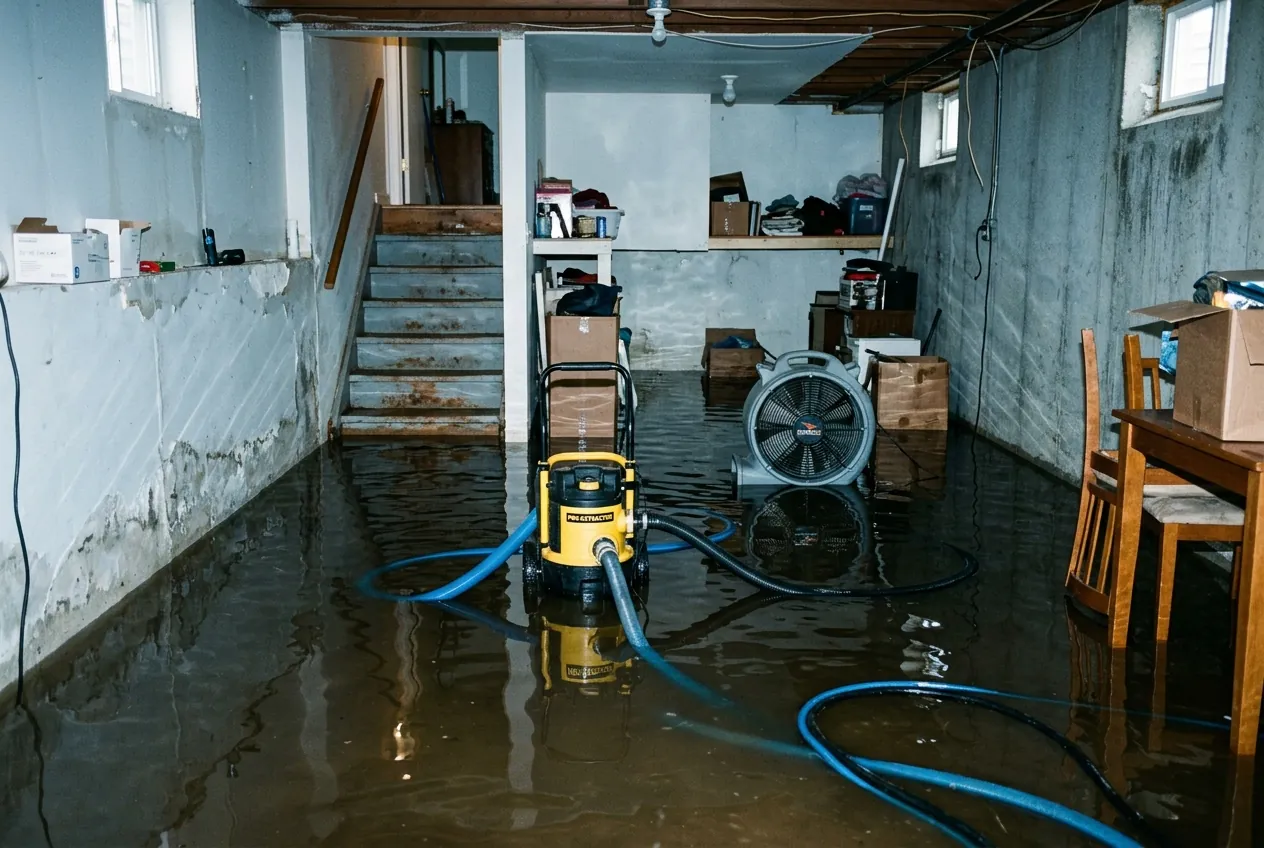
High-volume vacuum extraction removes bound water from concrete, subflooring, and crawlspaces.
Microbial Inactivation
Hospital-grade antimicrobial application and negative air filtration prevent fungal proliferation.
Reliable Structural Drying In Indian Trail
Structural foundations, concrete slabs, and crawlspace framing in Indian Trail, North Carolina absorb substantial volumes of water that traditional residential dehumidifiers cannot extract. Water Damage Master employs specialized deep-core drying strategies engineered specifically for structural masonry and dense building envelopes.
Through deep moisture probing and industrial desiccant air exchanges, we extract capillary moisture locked deep inside concrete pads, brick foundations, and crawlspace sub-structures. We eliminate damp conditions that attract subterranean pests, warp subfloors, and degrade foundation structural capacity.
Primary Service Zip Codes in Indian Trail
Frequently Asked Questions • Indian Trail, NC Water Mitigation
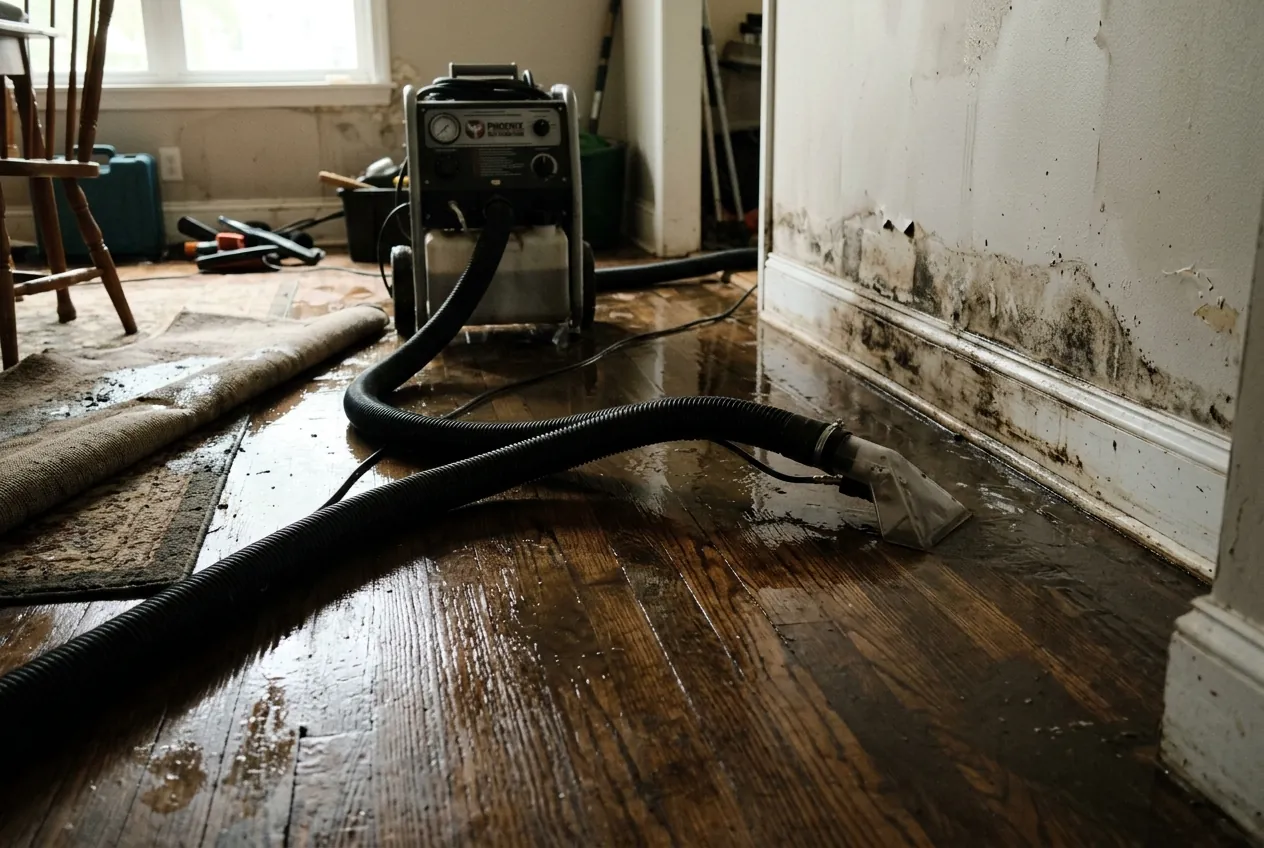
Yes. Raw sewage backups are hazardous emergencies containing parasites, E. coli, and airborne bio-contaminants. Our certified biohazard restoration teams in Indian Trail, North Carolina extract raw black water, bag and safely dispose of contaminated porous contents, pressure-wash concrete foundations with hospital-grade biocides, and install industrial dehumidifiers to dry crawlspace joists and subfloors completely.
Drywall exposed to Category 1 clean water can often be salvaged and dried in place if the gypsum core remains rigid and non-delaminated. However, if water wicked high up the wall, saturated fiberglass insulation, or involved Category 2 or Category 3 black water, industry standards mandate a "flood cut"—slicing away the lowest 12 to 24 inches of drywall. This allows our teams in Indian Trail, North Carolina to extract soaked insulation and directly ventilate wall framing cavities.
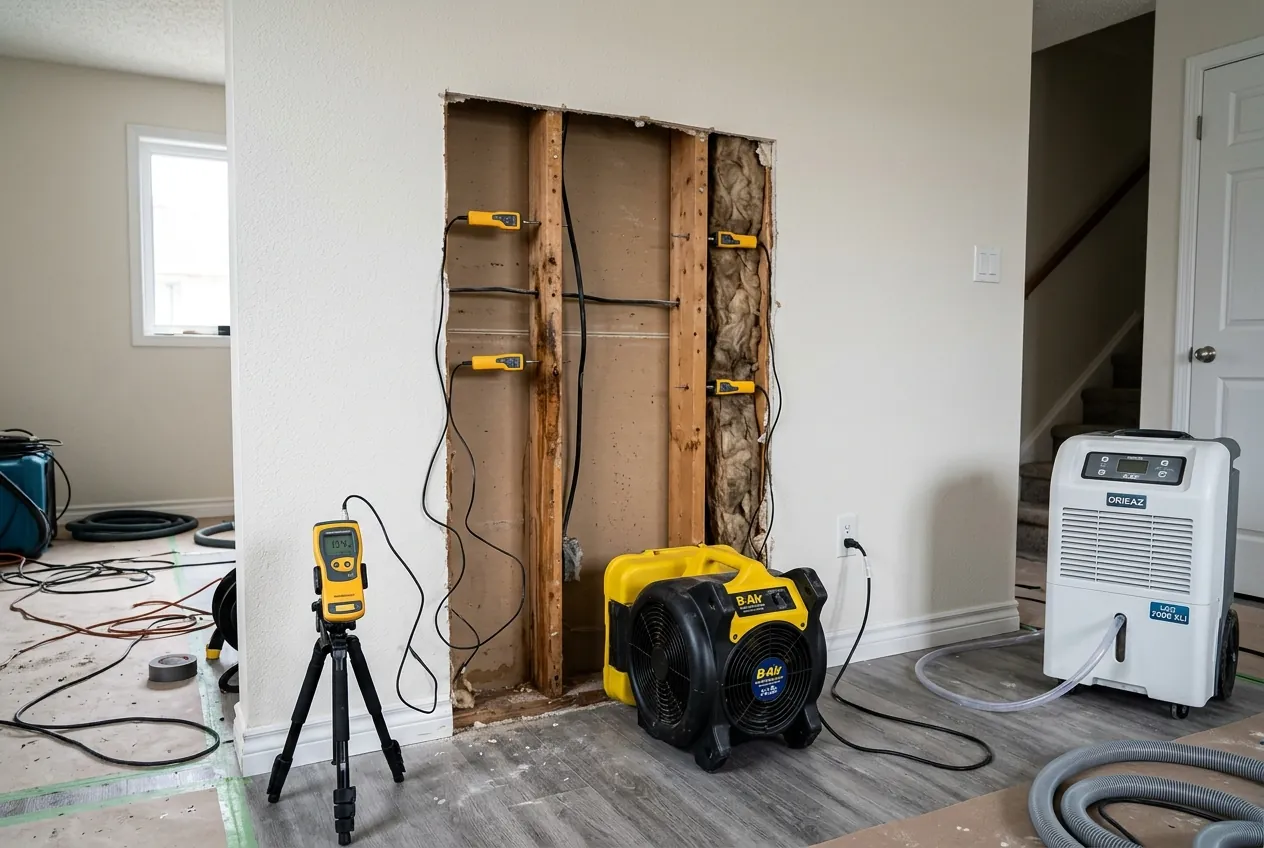
Insulation inside wall cavities traps moisture against exterior sheathing, leading to hidden rot. In Indian Trail, North Carolina, our crews remove baseboards and drill small, discreet 5/8-inch access holes near the bottom plate. We then attach specialized structural wall-cavity drying systems that force dehumidified warm air directly inside the wall framing, allowing us to dry the structure from the inside out without tearing down entire walls.
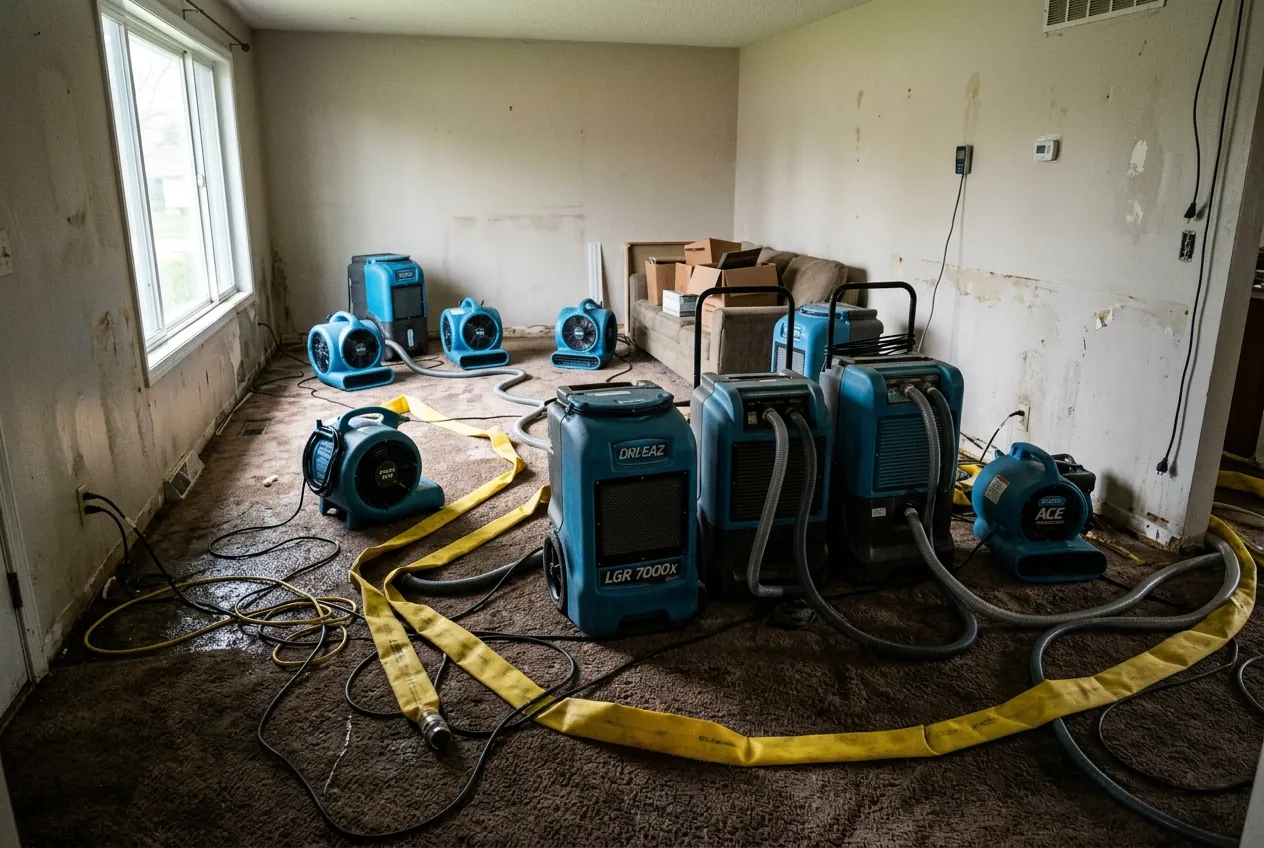
Household box fans merely circulate ambient humidity and can blow active mold spores across unaffected rooms. Opening windows often introduces outdoor humidity that prevents building materials from giving up their bound moisture. Professional structural drying by Water Damage Master in Indian Trail, North Carolina relies on closed, controlled drying chambers using high-capacity LGR dehumidifiers to extract gallons of water from the air daily while high-static air movers drive moisture out of deep subfloors.
On average, the structural drying phase requires 3 to 5 continuous days. Drying times depend on ambient outdoor weather in Indian Trail, North Carolina, the volume of water, and the specific density of affected materials like concrete, plaster, or hardwood. Technicians from Water Damage Master visit daily to take psychrometric readings (measuring grains per pound and relative humidity) and will only remove machinery once all materials reach certified dry standard benchmarks.
Our emergency crews in Indian Trail, North Carolina use non-invasive FLIR infrared thermal cameras combined with penetrating and non-penetrating pinless moisture meters. Thermal imaging detects evaporation patterns and temperature anomalies caused by damp insulation or trapped subfloor moisture. This enables us to pinpoint every pocket of moisture without needlessly cutting drywall or pulling up undamaged flooring.
If active fungal growth is uncovered during water mitigation, our crew immediately pauses high-velocity air movement to prevent spreading spores throughout your ductwork. We establish critical containment barriers using 6-mil poly sheeting under negative air pressure, notify you and your insurance adjuster, and transition the affected zone into formal IICRC S520 mold remediation protocol in Indian Trail, North Carolina.
Building materials such as gypsum board, subflooring, and wooden sill plates absorb liquid water rapidly through capillary action. Within 24 to 48 hours of saturation, fungal spores naturally present in indoor air activate and colonize porous surfaces. Fast response from Water Damage Master in Indian Trail, North Carolina stops moisture migration, creates controlled drying chambers, and prevents microscopic mold colonies from turning an extraction job into a major tear-out project.
Recent Disaster Recovery Outcomes in Indian Trail
"We arrived home from a holiday weekend to find our 50-gallon water heater had burst, soaking our hallway and two adjacent bedrooms. Water Damage Master used thermal imaging cameras to demonstrate exactly where water had seeped behind the drywall base plates. They dried everything in place using wall cavity injection systems and avoided tearing down our walls."
"Our HVAC air handler drain clogged in the attic during peak summer humidity in Indian Trail, North Carolina, causing the ceiling drywall above our nursery to buckle with water. Water Damage Master responded at 10 PM, relieved the ceiling pressure safely into buckets, extracted the attic framing moisture, and treated the joists against spore growth."
"Our boutique retail storefront in Indian Trail, North Carolina suffered extensive flooding when an overhead fire suppression sprinkler head was triggered accidentally. Water Damage Master deployed multiple crews, extracted hundreds of gallons from carpet tiles, and used desiccant drying technology to preserve our merchandise and reopen our doors within days."
Experiencing Flooding or a Plumbing Breach in Indian Trail?
Do not wait for structural timbers to cup or black mold to colonize your walls. Call Water Damage Master now for 24/7 priority emergency response.
Call Now: (877) 410-2199