Properties Dried & Certified
Average Emergency Mobilization
Psychrometric Dry Standard
Water Damage Restoration Services In St. Helena
Expert Water Damage Restoration Services in St. Helena
The critical window between water contact and active fungal germination in St. Helena is merely 24 to 48 hours. Water Damage Master maintains fully equipped emergency vehicles on standby across the St. Helena metropolitan area to provide instant stabilization.
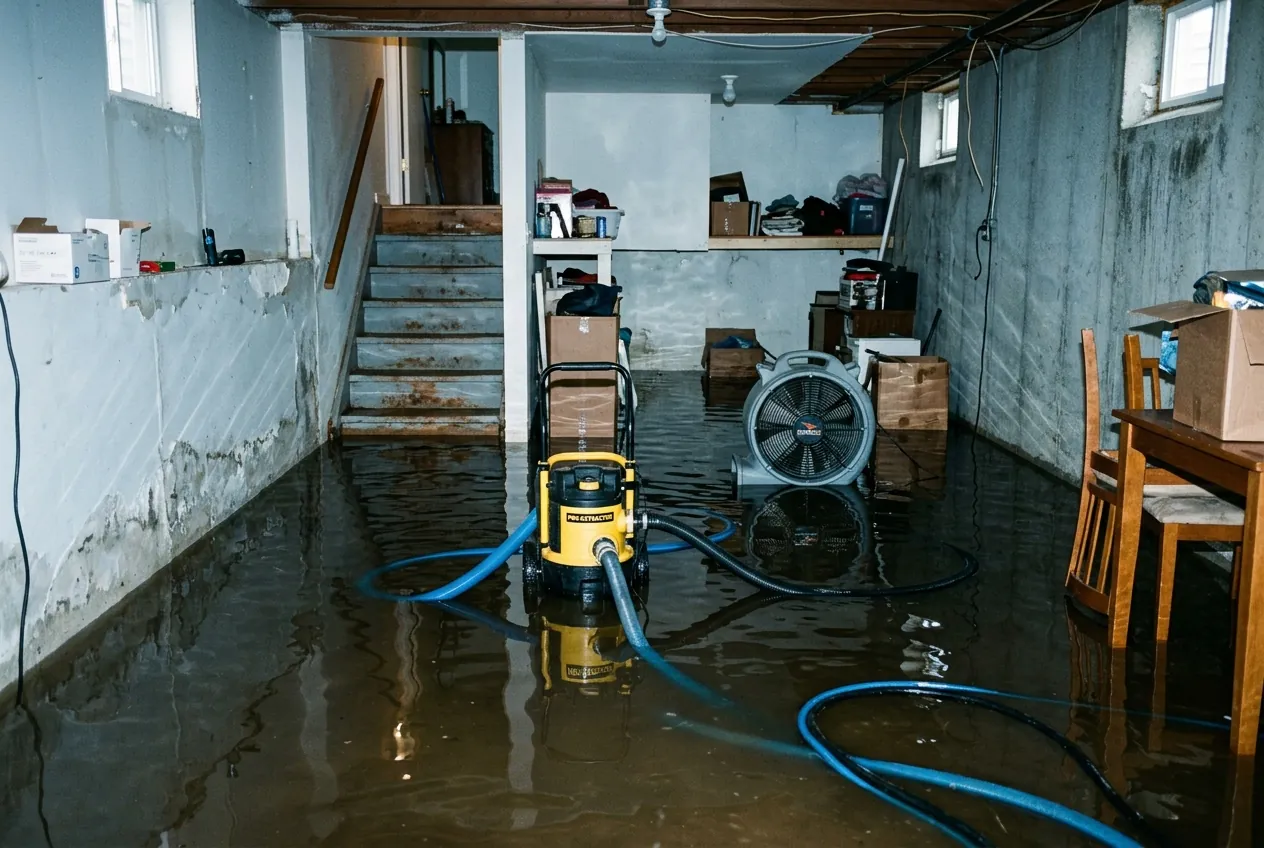
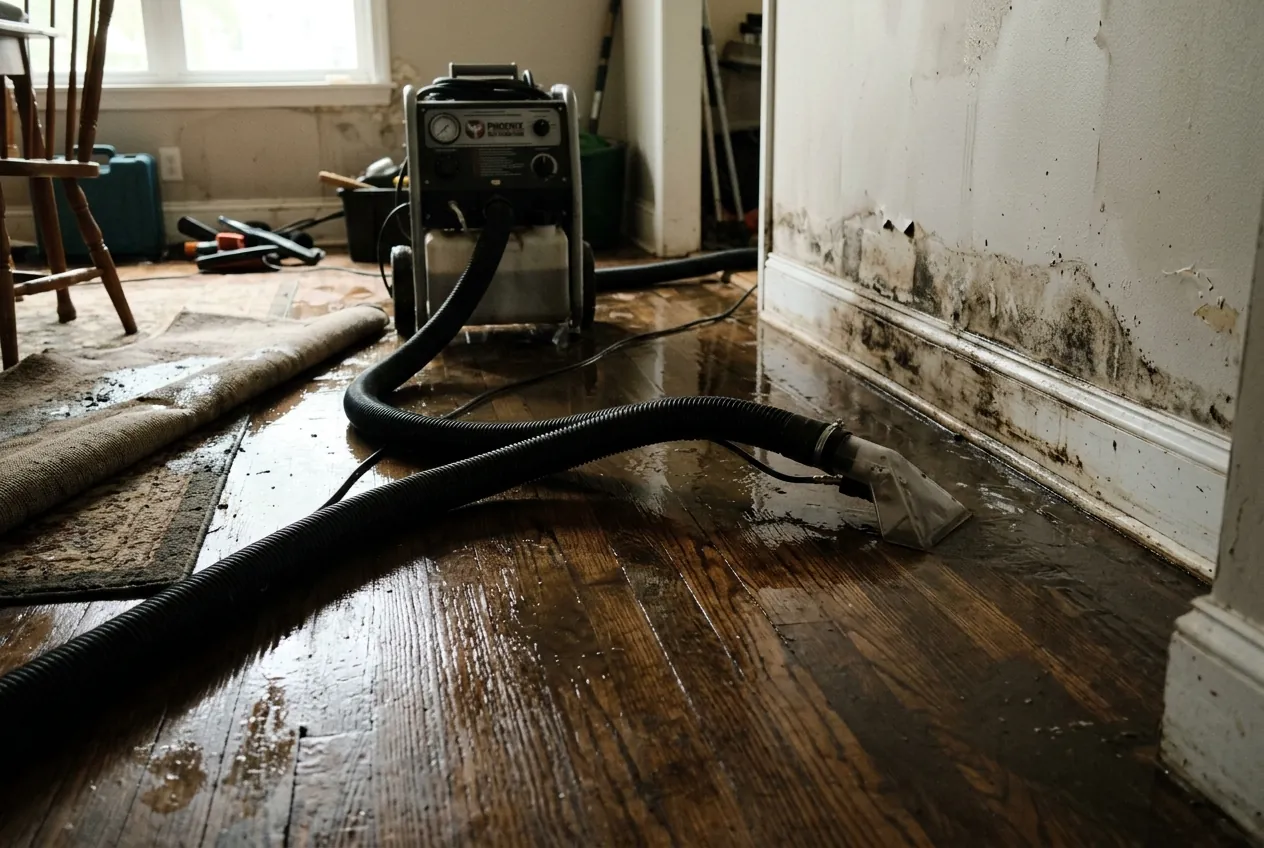
Elevated relative humidity throughout the St. Helena region drastically accelerates indoor fungal germination when standing water is not extracted within 24 hours. Our engine-driven vacuum extractors remove thousands of gallons within hours, drastically shortening the drying curve and protecting your family from the respiratory dangers of secondary mold colonization.
We proudly protect homes, multi-family residences, and commercial facilities throughout St. Helena, Pender County, and adjacent North Carolina zip codes.
Deep Structural Extraction
High-volume vacuum extraction removes bound water from concrete, subflooring, and crawlspaces.
Microbial Inactivation
Hospital-grade antimicrobial application and negative air filtration prevent fungal proliferation.
Reliable Structural Drying In St. Helena
Commercial water losses in St. Helena, North Carolina demand an industrial capability capable of managing high-rise tenant footprints, critical data centers, and multi-story plumbing failures. Water Damage Master possesses the logistical bandwidth and commercial drying fleet to scale instantly for any commercial emergency.
We deploy commercial desiccant dehumidifiers capable of delivering tens of thousands of cubic feet of ultra-dry air per minute through temporary ducting networks. Our phased containment protocols allow unaffected sections of your business to remain operational while contaminated areas undergo rapid mitigation.
Primary Service Zip Codes in St. Helena
Frequently Asked Questions • St. Helena, NC Water Mitigation
Standard property insurance policies typically cover sudden and accidental internal water discharges, including ruptured water heater tanks, frozen burst plumbing, and failed appliance lines. Overland flooding from external storm runoff usually requires dedicated NFIP or private flood policies. Water Damage Master works directly with your insurance carrier in St. Helena, North Carolina, providing moisture mapping logs, thermal photographic evidence, and Xactimate-formatted itemized estimates to streamline claim approval.
Psychrometrics is the thermodynamic science of atmospheric air and water vapor behavior. Rather than simply blowing air randomly, our technicians in St. Helena, North Carolina calculate specific vapor pressure differentials between saturated building materials and the surrounding air. By adjusting ambient temperature, dehumidifier capacity, and airflow velocity, we force water molecules out of dense structural studs into the air where our dehumidifiers condense and drain them away.
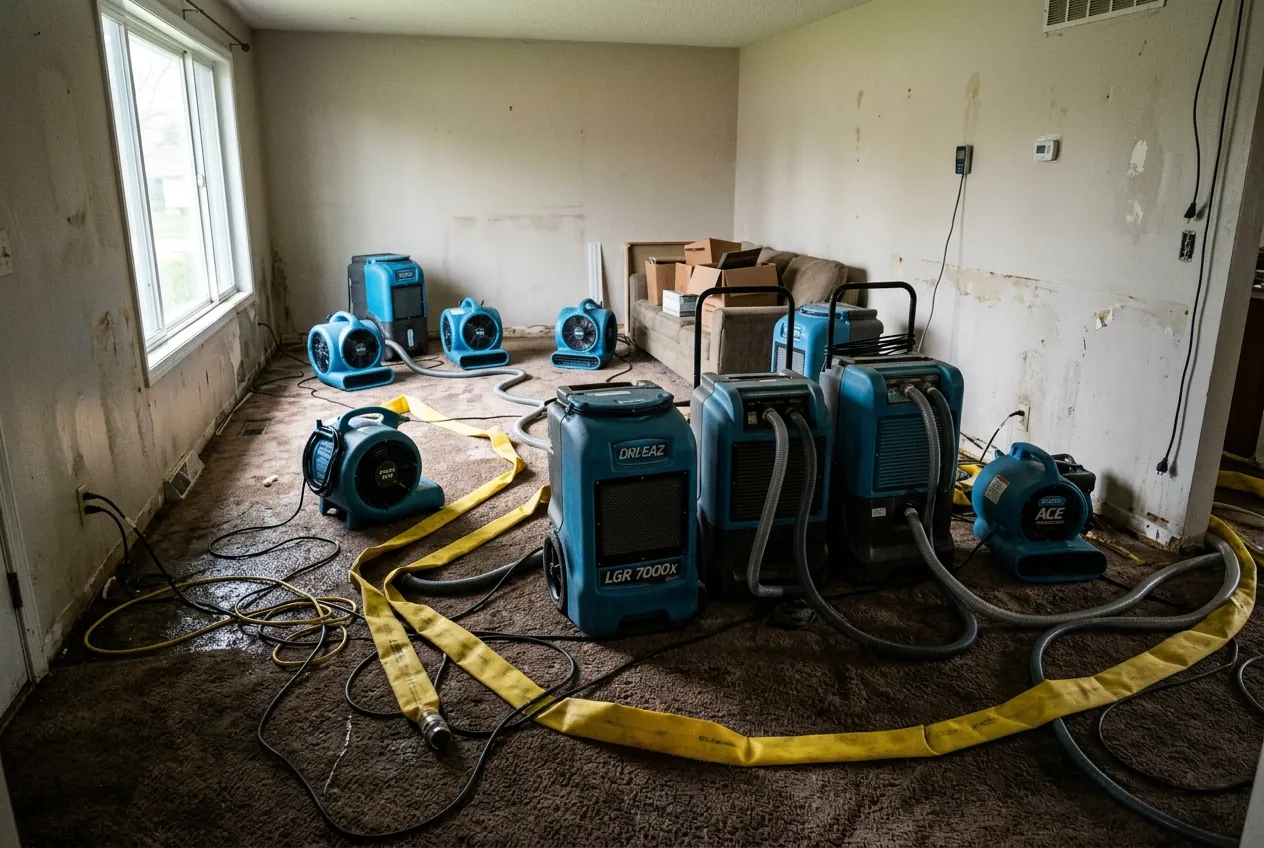
We deploy an array of specialized equipment engineered for structural remediation: truck-mounted high-CFM vacuum extractors, Low-Grain Refrigerant (LGR) dehumidifiers, commercial desiccant units for dense framing, high-velocity axial air movers to break the boundary layer of moisture, and HEPA 500 air scrubbers to capture airborne particulates and biological contaminants throughout your St. Helena, North Carolina home.
For Category 1 clean water losses with limited area involvement, staying on-site is generally acceptable though equipment generates steady white noise and warm ambient air. However, if sewage (Category 3), significant mold contamination, or compromised structural framing is present, Water Damage Master strongly recommends temporary relocation for health and safety until negative-pressure containment and sanitization are verified in St. Helena, North Carolina.
On average, the structural drying phase requires 3 to 5 continuous days. Drying times depend on ambient outdoor weather in St. Helena, North Carolina, the volume of water, and the specific density of affected materials like concrete, plaster, or hardwood. Technicians from Water Damage Master visit daily to take psychrometric readings (measuring grains per pound and relative humidity) and will only remove machinery once all materials reach certified dry standard benchmarks.
Drywall exposed to Category 1 clean water can often be salvaged and dried in place if the gypsum core remains rigid and non-delaminated. However, if water wicked high up the wall, saturated fiberglass insulation, or involved Category 2 or Category 3 black water, industry standards mandate a "flood cut"—slicing away the lowest 12 to 24 inches of drywall. This allows our teams in St. Helena, North Carolina to extract soaked insulation and directly ventilate wall framing cavities.
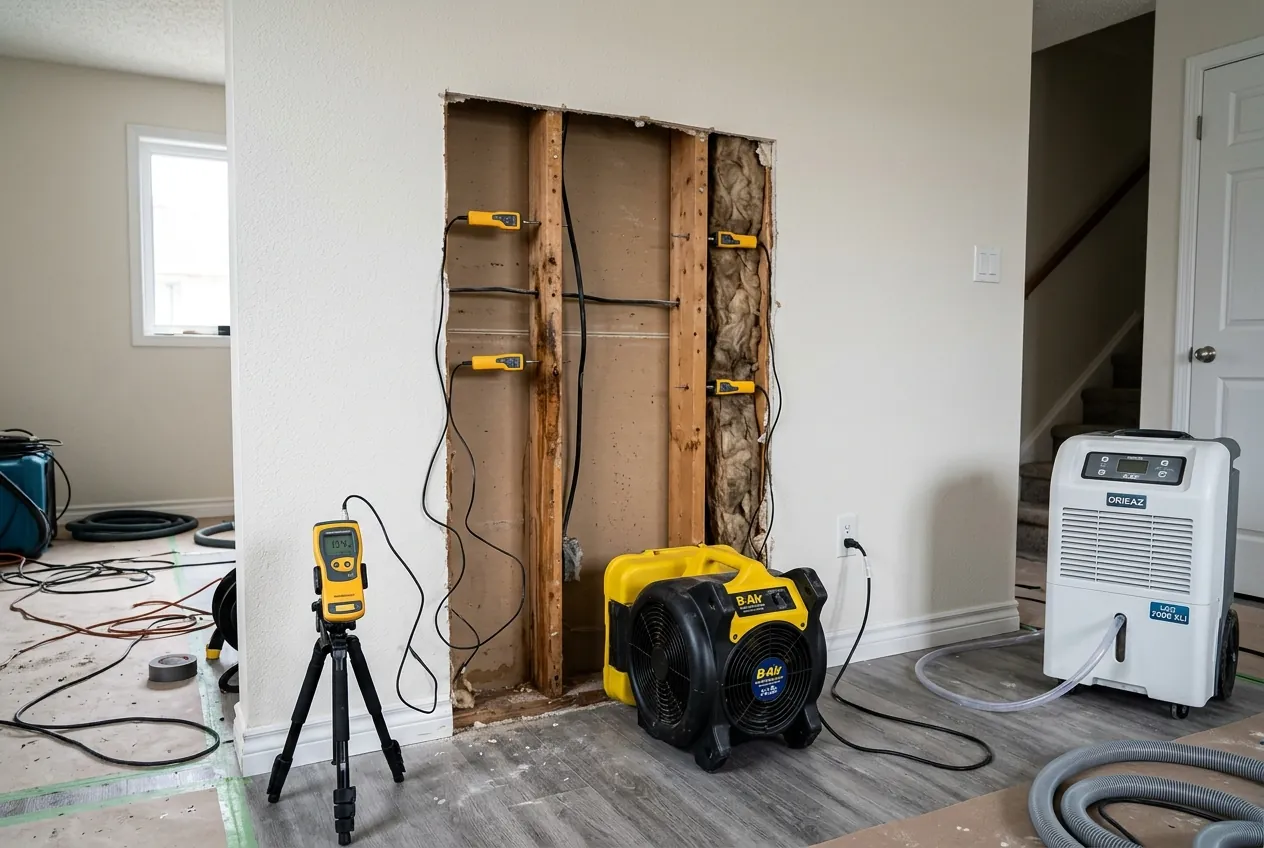
Drying is never determined by touch or guesswork. Restoration technicians from Water Damage Master track scientific drying goals every 24 hours using calibrated penetrating moisture meters, thermal imagers, and psychrometric sensors. We only conclude the drying phase when all structural materials—framing studs, sill plates, and subfloors—reach their regional dry standard equilibrium in St. Helena, North Carolina, accompanied by a comprehensive moisture clearance report.
The IICRC S500 standard classifies water into three hygiene categories: Category 1 (Clean Water) originates from sanitary sources like broken supply lines or faucet overflows. Category 2 (Grey Water) carries chemical or physical contamination from washing machines, dishwashers, or sump pump overflows. Category 3 (Black Water) is grossly unsanitary, containing sewage, ground surface floodwaters, or standing water that has stagnated. Each category requires distinct containment barriers, personal safety gear, and antimicrobial treatment protocols in St. Helena, North Carolina.
Recent Disaster Recovery Outcomes in St. Helena
"We noticed our utility bill spiking and discovered a slab leak saturating the foundation under our family room floor in St. Helena, North Carolina. Water Damage Master collaborated directly with our plumber, extracted the sub-slab moisture, and dried out the concrete and bottom framing studs. Their psychrometric tracking gave us complete assurance the structure was truly dry."
"Our finished basement took on eight inches of storm runoff when the municipal storm drain backed up. The team from Water Damage Master arrived equipped with heavy truck-mounted pump extractors. Within three hours, all standing black water was pumped out and hospital-grade antimicrobials were applied to the concrete foundation. Exceptional precision and professionalism."
"During kitchen renovations in St. Helena, North Carolina, our contractor accidentally nicked an active PEX water line inside a load-bearing wall. Water Damage Master was on-site within an hour with industrial air movers and moisture probes. They dried out the internal studs over 72 hours, enabling the contractor to resume work without structural delay."
Experiencing Flooding or a Plumbing Breach in St. Helena?
Do not wait for structural timbers to cup or black mold to colonize your walls. Call Water Damage Master now for 24/7 priority emergency response.
Call Now: (877) 410-2199