Properties Dried & Certified
Average Emergency Mobilization
Psychrometric Dry Standard
Water Damage Restoration Services In St. John
Expert Water Damage Restoration Services in St. John
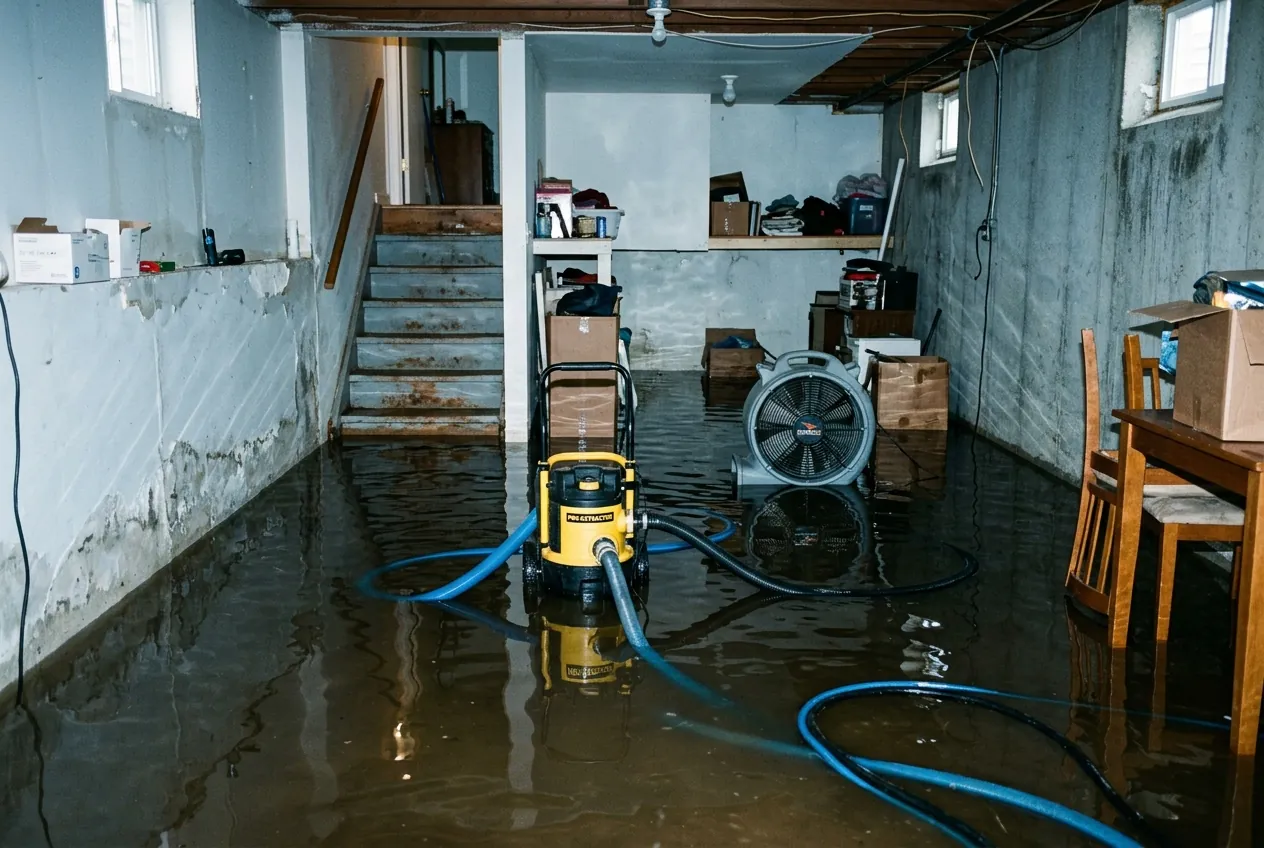
The critical window between water contact and active fungal germination in St. John is merely 24 to 48 hours. Water Damage Master maintains fully equipped emergency vehicles on standby across the St. John metropolitan area to provide instant stabilization.
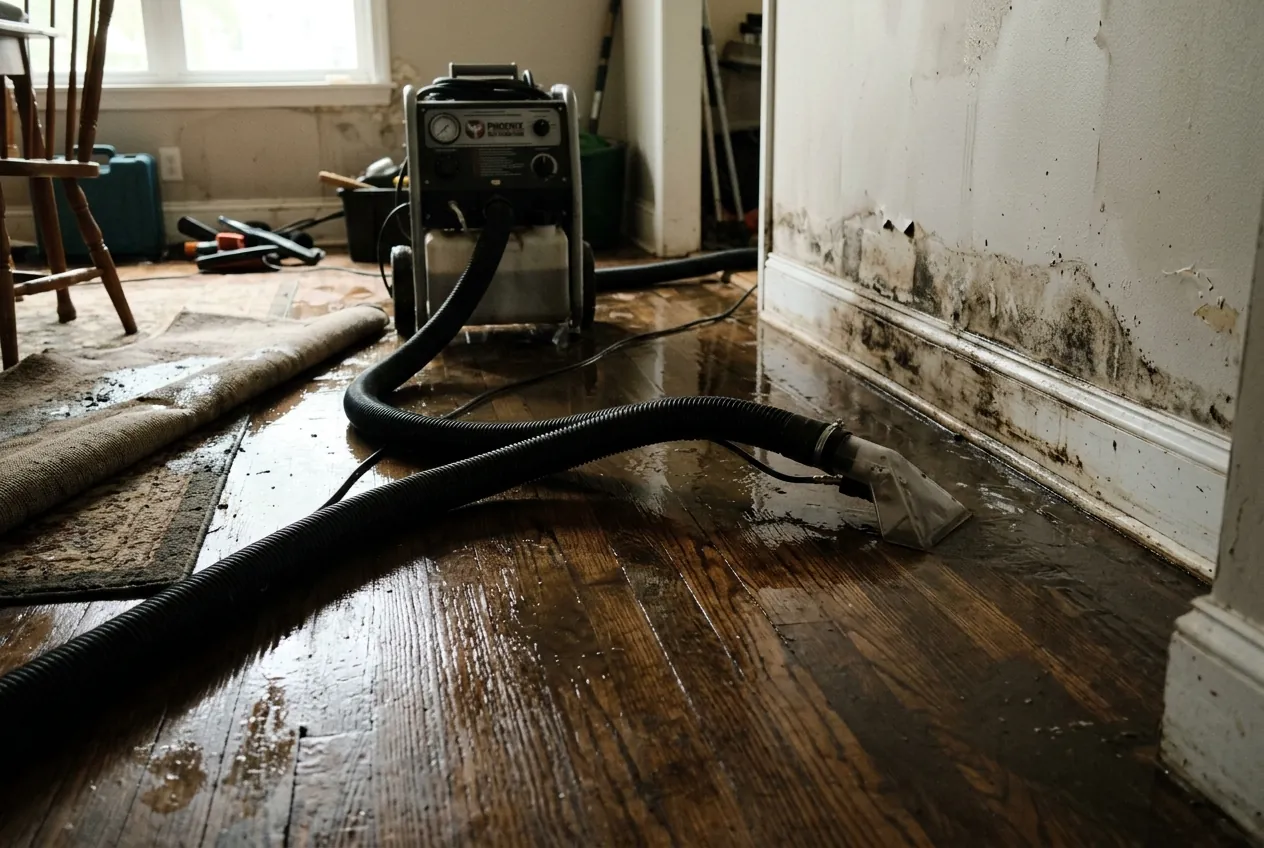
Sub-slab plumbing failures beneath St. John foundations demand immediate dielectric thermal imaging before foundation concrete absorbs migrating moisture. Our engine-driven vacuum extractors remove thousands of gallons within hours, drastically shortening the drying curve and protecting your family from the respiratory dangers of secondary mold colonization.
We proudly protect homes, multi-family residences, and commercial facilities throughout St. John, Rolette County, and adjacent North Dakota zip codes.
Deep Structural Extraction
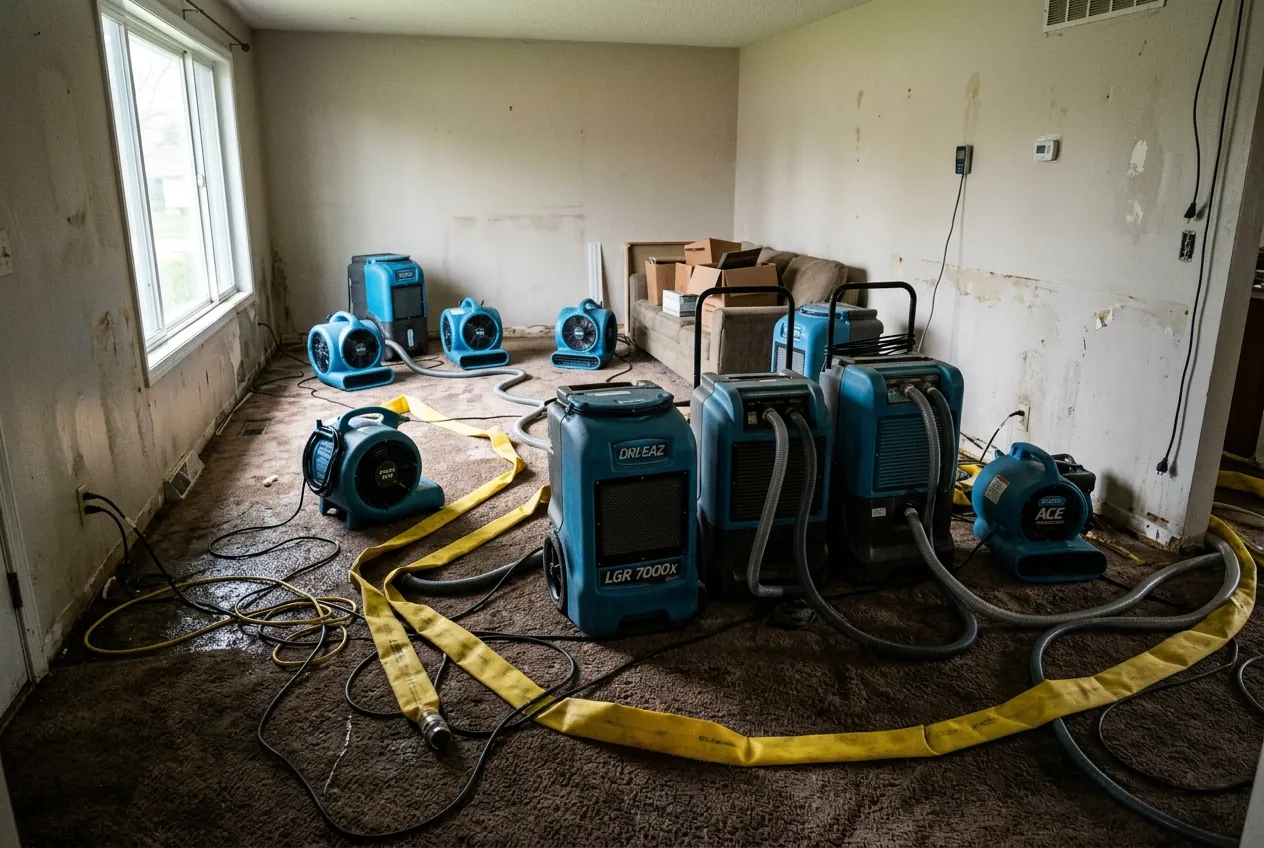
High-volume vacuum extraction removes bound water from concrete, subflooring, and crawlspaces.
Microbial Inactivation
Hospital-grade antimicrobial application and negative air filtration prevent fungal proliferation.
Reliable Structural Drying In St. John
Category 3 black water intrusions, including municipal sewer line overflows and storm runoff in St. John, North Dakota, represent serious biohazard risks teeming with enteric viruses, bacterial pathogens, and chemical toxins. Water Damage Master treats every contaminated water incident with strict bio-containment precautions.
Our technicians wear Level C protective gear, isolate affected spaces under negative air pressure to halt airborne pathogens, extract unsanitary fluids, safely remove non-salvageable porous items, and apply EPA-registered broad-spectrum hospital disinfectants to all structural boundaries.
Primary Service Zip Codes in St. John
Frequently Asked Questions • St. John, ND Water Mitigation
The IICRC S500 standard classifies water into three hygiene categories: Category 1 (Clean Water) originates from sanitary sources like broken supply lines or faucet overflows. Category 2 (Grey Water) carries chemical or physical contamination from washing machines, dishwashers, or sump pump overflows. Category 3 (Black Water) is grossly unsanitary, containing sewage, ground surface floodwaters, or standing water that has stagnated. Each category requires distinct containment barriers, personal safety gear, and antimicrobial treatment protocols in St. John, North Dakota.
First, shut down the main water shutoff valve if the source is an internal plumbing line. Never enter rooms with standing water if power outlets or submerged electrical cords are active—shut off corresponding breakers at the electrical panel first. Avoid placing newspapers on damp carpet as wet ink transfers permanently, and elevate draperies and furniture legs onto aluminum foil or plastic blocks. Then call (877) 410-2199 for live emergency guidance.
Due to the "stack effect," up to 50% of the air on your ground floor originates in your crawlspace or basement. When standing water or high humidity accumulates underneath your home in St. John, North Dakota, it causes wood-destroying fungal decay in floor joists and allows microbial spores, radon, and moisture vapors to seep upward into living areas. We pump out crawlspace water, sanitize the ground cover, and dry structural timbers.
If active fungal growth is uncovered during water mitigation, our crew immediately pauses high-velocity air movement to prevent spreading spores throughout your ductwork. We establish critical containment barriers using 6-mil poly sheeting under negative air pressure, notify you and your insurance adjuster, and transition the affected zone into formal IICRC S520 mold remediation protocol in St. John, North Dakota.
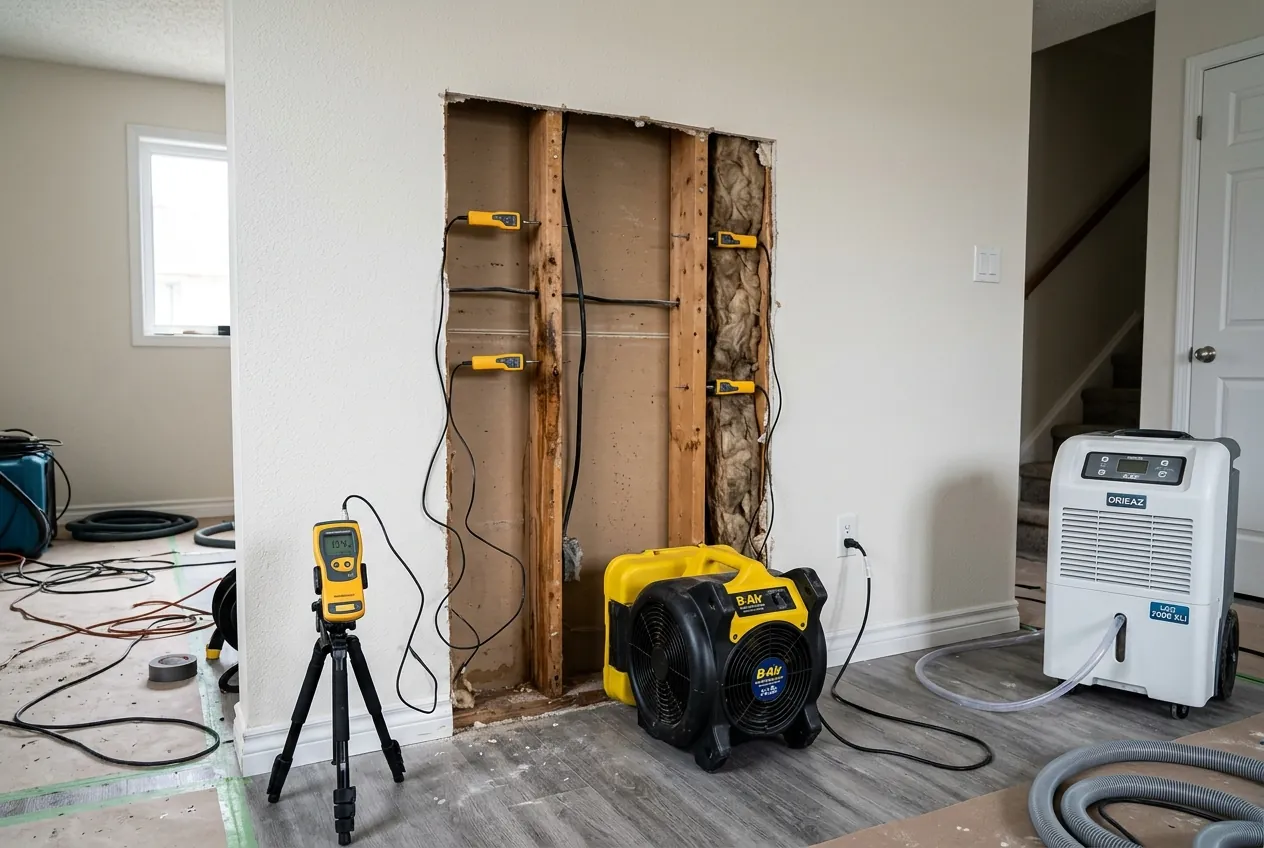
Insulation inside wall cavities traps moisture against exterior sheathing, leading to hidden rot. In St. John, North Dakota, our crews remove baseboards and drill small, discreet 5/8-inch access holes near the bottom plate. We then attach specialized structural wall-cavity drying systems that force dehumidified warm air directly inside the wall framing, allowing us to dry the structure from the inside out without tearing down entire walls.
Our emergency crews in St. John, North Dakota use non-invasive FLIR infrared thermal cameras combined with penetrating and non-penetrating pinless moisture meters. Thermal imaging detects evaporation patterns and temperature anomalies caused by damp insulation or trapped subfloor moisture. This enables us to pinpoint every pocket of moisture without needlessly cutting drywall or pulling up undamaged flooring.
Yes. We provide direct insurance carrier billing to minimize your financial and logistical stress during an emergency. Our claim specialists in St. John, North Dakota work hand-in-hand with regional adjusters, providing timestamped moisture readings, thermal imagery, and standard line-item Xactimate documentation so your claim is processed smoothly without unnecessary out-of-pocket delays.
In many instances, yes. When addressed quickly, our technicians in St. John, North Dakota utilize specialized injection drying systems and heavy-duty floor mat extraction equipment that pulls moisture directly from beneath hardwood planks and subfloor sheathing. By drawing air down through the seams under negative pressure while maintaining controlled ambient humidity, we frequently prevent permanent cupping and avoid costly floor replacement.
Recent Disaster Recovery Outcomes in St. John
"Severe thunderstorm winds ripped off part of our roof flashing in St. John, North Dakota, allowing torrential rain into our master bedroom attic. Water Damage Master extracted water from the soaked blown-in insulation, set up ceiling drying equipment, and treated the structural rafters to prevent mildew. Outstanding craftsmanship during a stressful storm week."
"Our boutique retail storefront in St. John, North Dakota suffered extensive flooding when an overhead fire suppression sprinkler head was triggered accidentally. Water Damage Master deployed multiple crews, extracted hundreds of gallons from carpet tiles, and used desiccant drying technology to preserve our merchandise and reopen our doors within days."
"We arrived home from a holiday weekend to find our 50-gallon water heater had burst, soaking our hallway and two adjacent bedrooms. Water Damage Master used thermal imaging cameras to demonstrate exactly where water had seeped behind the drywall base plates. They dried everything in place using wall cavity injection systems and avoided tearing down our walls."
Experiencing Flooding or a Plumbing Breach in St. John?
Do not wait for structural timbers to cup or black mold to colonize your walls. Call Water Damage Master now for 24/7 priority emergency response.
Call Now: (877) 410-2199